Why a Lampshade Changes the Light You Notice
Learn how lampshade shape, openings and material alter the light around a lamp, so you can choose a shade that suits its purpose and position.
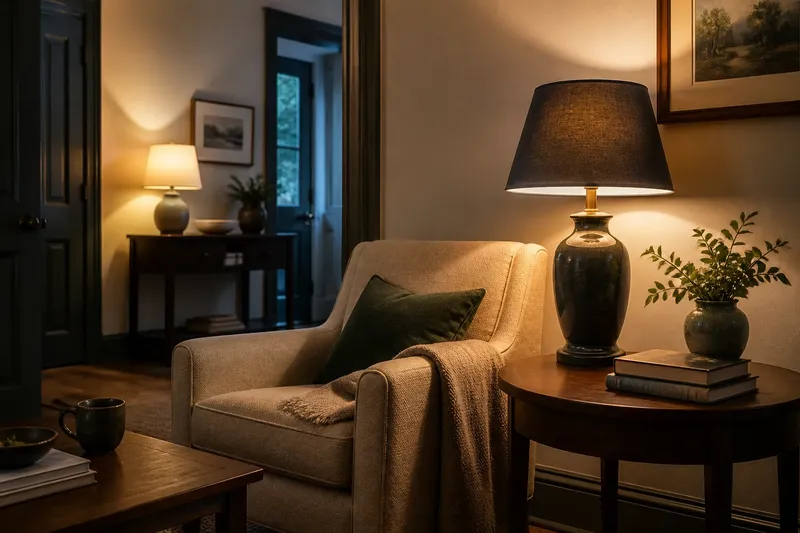
The common mistake with a lampshade is to choose by colour or pattern alone. A poor match can hide useful light, send glare towards your eyes or leave the space around the lamp unexpectedly dim. The shade is part of the light source: change it, and the same lamp can feel quite different.
To understand why, follow the light from the bulb to the shade, then into the room. The shape and size of the openings influence its direction; the material determines how much passes through the sides and how that light appears. You can judge these effects more clearly by looking at what the lamp illuminates than by inspecting the shade on its own.
Where does a lampshade send the light?
Most shades direct light through one or both open ends. A drum shade, with fairly straight sides, tends to leave a broad path above and below it. A tapered shade has a wider lower opening than upper one, so it often directs more of the visible light towards the space beneath it.
A shade with a narrow bottom opening can focus more of the visible light downwards, which may suit a table lamp used for reading or close work. The trade-off is that less light escapes sideways. A wider opening exposes more of the bulb’s output to the room, though the bulb may be easier to see from a seated position.
The top opening matters too. If it is closed or covered, less light goes upwards; if it is open, the ceiling and upper wall can receive more illumination. That can change how enclosed a corner feels. The opening works like a doorway: it determines which way the light can leave, but does not create the light itself.
What do shape and proportions change?
Shape affects more than direction. A shade that is too small for its base can look pinched and may expose the bulb from an ordinary viewing angle. A very wide shade can dominate a narrow table or sit awkwardly beside a headboard. The proportions of the lamp and nearby furniture help determine whether the light feels at home in its position.
Consider the lamp’s location and the views from which it will be seen. In a reading chair, check whether the bulb is visible when you sit down and turn your head. On a console, consider the view from the doorway as well as from nearby seating. A shade can seem balanced straight on but send an unwelcome bright spot towards someone approaching from the side.
The outline also changes the pattern of brightness on nearby surfaces. A narrow shade may leave the wall behind the lamp comparatively dim, while a broad, open design can spread light farther across it. These are tendencies rather than fixed rules: the bulb, shade dimensions, lamp height and room surfaces all affect the result.
How does the material affect the appearance?
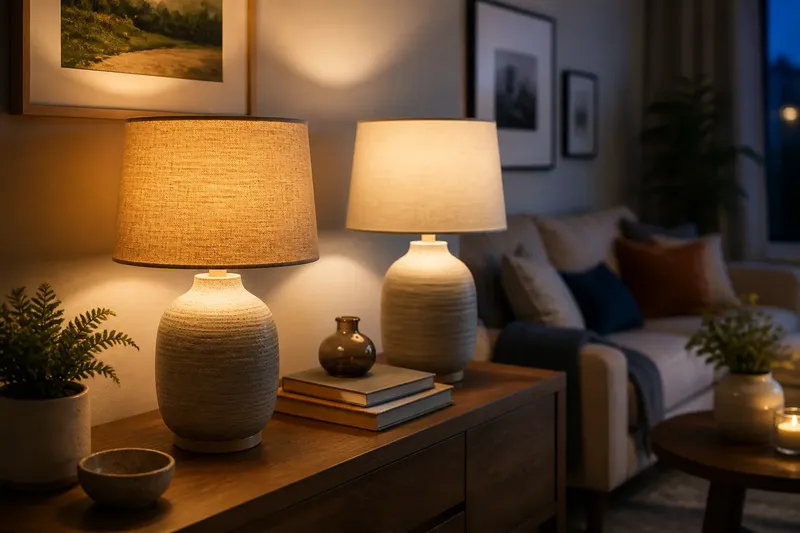
Opaque materials, such as tightly woven fabric or painted metal, block much of the light at the sides and let it leave mainly through the openings. The result can be a more defined area of light and a darker shade exterior. Translucent fabric or pale paper allows some light through the sides, making the shade itself glow and softening the boundary between lamp and room.
Colour matters because it filters light that passes through. A pale shade generally lets more light through than a dark, dense one, while a coloured lining can tint the light reflected from it. A metallic or bright inner surface may send more light back through the openings than a dark interior. Look inside as well as outside when comparing shades; two covers in similar colours can behave differently if their linings differ.
Texture can be noticeable at close range. Woven fabric may show a gentle surface pattern when lit, whereas smooth material tends to look more even. If the bulb is visible through a thin shade, its brightness can remain prominent despite the softened material. The shade’s transparency and the bulb’s position therefore matter together.
How can you tell if a shade suits the lamp?
Start with the lamp’s job and the places from which you see it. A bedside lamp may need a low, comfortable pool of light without exposing the bulb to someone lying down. A desk lamp may benefit from a more open lower end, while a decorative lamp on a sideboard may be judged as much from across the room as from nearby.
Say you have a table lamp beside a reading chair and find its light uncomfortably direct. Imagine its current shade has a wide lower opening, a translucent side and a bulb visible from the chair. You replace it with a slightly deeper, opaque shade whose lower opening still clears the lamp’s base. The expected result is less of the bulb in your seated sightline and a more downward-directed patch of light, with less illumination escaping through the sides. You trade some ambient light for reduced direct glare.
Before choosing a replacement, check the lamp’s fitting, shade carrier and bulb clearance. The shade must sit securely and leave appropriate room around the bulb. Follow the lamp and shade makers’ instructions for compatibility, materials and permitted bulb types.
Which lampshade details should you compare?
- Lower opening: Check whether the bulb is exposed from your usual seat. If it is, choose a shape that controls glare while leaving enough light for the lamp’s task; if it is not, retain the opening if its spread suits the room.
- Upper opening: Look at the ceiling above the lamp. If you want light reaching it, choose an open top; if you prefer light directed downwards, consider a covered top, provided it is compatible with the lamp.
- Side material: Check whether light passes through the sides. If you want the shade to glow, choose a translucent material; if you want light mainly through the openings, choose an opaque one.
- Interior finish: Compare the lining. If a pale or reflective interior returns light through the openings in the direction you want, it may suit the lamp; if it creates an unwelcome bright patch, consider a darker lining or different opening.
- Proportion: View the shade on the lamp beside its furniture. If it looks cramped or overwhelms the setting, compare a different shape or size; if the proportions look settled, check the light before deciding.
- Seated sightline: Look from the actual chair, bed or doorway where the lamp will be used. If the bulb remains exposed, try a deeper shade or one with a narrower opening; if it is hidden but the useful area is dim, consider a more open design.
What should you look for when choosing a shade?
Does a darker lampshade make a room darker?
It can reduce the light passing through the sides, leaving more to emerge from the openings. The room’s appearance then depends on where those openings point and how the shade is lined.
Does a lampshade change bulb colour?
A coloured or strongly tinted shade can colour light that passes through it, while an opaque shade mainly affects the light leaving its openings. The bulb’s own colour and the room’s surfaces also shape what you perceive.
Can one shade work on different lamps?
It may suit more than one base if its fitting, clearance and proportions are compatible. Compare the result on each lamp in its intended position, because the same shade can conceal a bulb in one setting and expose it in another.
How can I judge a shade before buying it?
Note its openings, material and lining, then compare those features with the lamp’s purpose and your usual sightline. If possible, view the shade with a similar bulb and from the place where you will use the lamp.
A lampshade is best judged by the light it directs and filters, not merely as a cover for a bulb. When looking for a lampshade that changes the light you notice, begin with the direction you want, then consider how much light should pass through its sides and whether the bulb remains comfortable to look towards. Those observations make the choice more deliberate while keeping the shade’s role distinct from the lamp’s placement and bulb.