A Window-Side Afternoon: A Small Daylight Observation
A window-side daylight observation helps you notice when sun, shadows and reflections change one corner, so you can understand its feel without rearranging it.
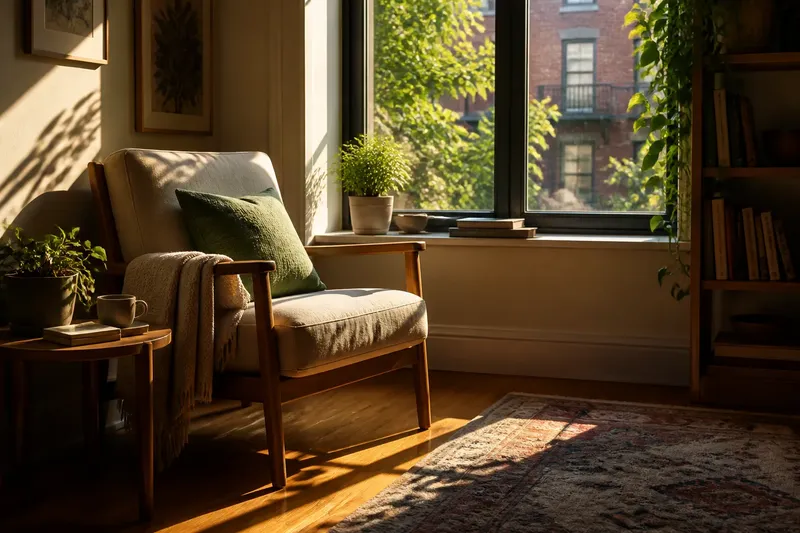
The common mistake with a window-side daylight observation is to glance at a corner once and decide that it is simply bright or dim. That impression can mislead you later: a page that seemed easy to read may catch glare, or a patch of sun may reach a chair when you want the room to feel settled. A few ordinary glances across an afternoon give you a more useful picture.
Choose a corner you use or pass often: perhaps an armchair, a desk, a houseplant or a clear patch of floor. You are not trying to rate the room or find an ideal arrangement. The aim is to notice how daylight changes in a familiar spot.
What should you notice in one corner?
Keep your view small and consistent: include the window edge, a nearby wall, the floor and one recognisable object. Choose an ordinary day when you expect to be home for part of the afternoon. Clear skies are not necessary; passing cloud is part of the conditions a room experiences.
Do not look for one best moment. Daylight shifts with the sun, cloud, the view outside and the surfaces inside. The corner may feel calm at one point and sharply lit later; both observations can be true.
Look from where you normally sit or stand. You do not need to measure brightness, mark a wall or watch continuously. A few glances linked to familiar parts of your day are enough to notice change.
How can you follow the afternoon without equipment?
Choose three natural check-in moments: after lunch, later in the afternoon and around the time you usually wind down. Fit them into your routine rather than setting alarms. Each time, pause briefly in the same place and look at the same part of the corner.
First, find the brightest area. Is it on the floor, a wall, a table or beyond the window? Notice whether direct daylight reaches the spot or whether light arrives after reflecting from a pale wall or ceiling. You are describing what you see, not judging it.
At the next glance, check whether the bright area has moved, narrowed, widened or vanished. A plant’s outline or the window frame’s shadow can make the shift easier to see. Sharp shadow edges are usually more obvious than gradual changes in diffuse light.
At the last glance, compare the corner with the rest of the room. Does it feel like a quiet recess, a bright focal point or a patch you barely notice? A rough comparison is enough to connect the visible light with the room’s changing feel.
Which changes are worth paying attention to?
Notice where light falls and how the surface affects its appearance. Sun on a wooden floor may seem warmer than sun on a white wall. A glossy tabletop can send a glint towards your eyes, while matte fabric tends to soften the impression. The material is part of what you are seeing.
Watch for colour shifts without trying to name them precisely. A wall can seem neutral in diffuse daylight, warmer where direct sun reaches it and cooler as cloud or shadow takes over. Nearby colours also influence your impression: a green cushion beside a pale surface can make the contrast more noticeable.
Distinguish direct from indirect light. Direct daylight often creates a brighter patch or a recognisable shadow. Indirect light, scattered by cloud or reflected around the room, tends to fill the corner more evenly. The brightest moment may not be the most comfortable one.
Notice interruptions as well. A passing cloud can soften the room; a neighbouring building, tree or balcony can cast a broad shadow; and the window frame can divide the light into bars. These are ordinary features of the corner’s afternoon, not distractions from it.
What can three afternoons tell you?
If convenient, repeat the same casual glances on two other afternoons. Keep the corner and viewpoint consistent, but do not wait for matching weather. Differences between sun, cloud and changing sky can reveal the range of conditions more clearly than one afternoon alone.
On one day, focus on the floor and lower wall; on another, look at eye level, where a chair back or shelf may catch the light. These are optional prompts, not extra tasks. If you miss a glance, simply notice the corner the next time you pass.
Say you often read in an armchair beside a window. On the first afternoon, a sun patch moves from the rug towards the chair. On the next, cloud leaves the corner evenly lit. On a third, the window-frame shadow crosses the page area. Taken together, those observations suggest that the seat feels lively in direct sun, more settled under cloud and potentially distracting when the shadow cuts across the page. The result is a clearer picture of the conditions, not a verdict that the chair must move.
Repeated afternoons help you distinguish a familiar change from an unusual spell of weather. It is a little like turning a page in a book: the setting stays the same, but the part you notice shifts. Here, the room remains still while daylight changes across its surfaces.
How does window orientation shape what you see?
The direction a window faces affects when direct sun may reach the room, but the view outside matters too. Trees, nearby walls, balconies and rooflines can interrupt or soften incoming light. You do not need to identify the window’s orientation before observing; the visible changes are enough for this exercise.
The sun’s path and the length of the day vary with the season. If a corner looks different from one week to another, the room itself may be unchanged. Treat what you notice as a record of those particular afternoons, not a permanent description.
Leave curtains and blinds in their usual position during your main observations. If you routinely adjust them, notice when you do so and what changes afterwards. That small detail helps explain how your own habits affect the daylight in the corner.
What questions might come up as you watch?
Do I need to write anything down?
No. A note on paper or your phone can help you remember a pattern, but it is optional. If you record anything, keep it plain: “bright strip on floor, soft shadow on wall”.
Should I choose a sunny afternoon?
Not necessarily. Sun makes moving patches and sharp shadows easy to spot; cloud can reveal whether the corner is lit evenly. Ordinary variation gives you a broader impression than waiting for one particular kind of day.
What if the daylight seems unchanged?
That is still useful to notice. The window may face a shaded view, or the corner may receive mostly reflected light. Look for smaller shifts in contrast, colour or how clearly you can see objects.
Can this observation help me decide where to put a lamp?
It can show what daylight already does in the corner, but it cannot settle every lighting need. If you later consider a lamp, think about the activity, the position of your eyes and hands, and whether you need focused or softer light.
What should you do with what you noticed?
After a few afternoons, recall or review the moments that stood out. Perhaps diffuse light makes the corner feel welcoming, direct sun creates a distracting reflection, or a plant shadow gives a plain wall texture. Choose the observation that matters to how you use the room.
- Check whether direct sun reaches a seat or work surface; if it causes discomfort, consider adjusting your usual blind or curtain at that time, otherwise leave the setting as it is.
- Check whether a bright reflection appears on a glossy table or screen; if it distracts you, change the viewing angle or reduce the reflection, otherwise keep the arrangement.
- Check whether a window-frame shadow crosses a page or work area; if it interferes with the task, try a different seat or time, otherwise treat it as a visible feature of the afternoon.
- Check whether cloud makes the corner more evenly lit; if that suits how you use the space, note that condition, otherwise observe what direct sun changes.
- Check whether a nearby tree or building shades the window; if the corner remains dim during your usual activity, consider whether a task lamp is needed, otherwise no change is called for.
- Check whether you already adjust curtains for privacy or glare; if that routine changes the light in a helpful way, keep it in mind, otherwise leave your usual habit untouched.
You do not have to rearrange furniture, buy a curtain or alter your routine. If a recurring reflection bothers you, you could draw a blind when it appears. If a patch of sun makes an empty wall more interesting, you can simply enjoy noticing it.
A window-side daylight observation is useful when it leaves you with a specific understanding of what changes, roughly when you notice it and how that shift affects your ordinary use of the room. The next time a shadow crosses the floor, you may recognise whether it is a brief patch of direct sun or the softer light that carries the afternoon on.